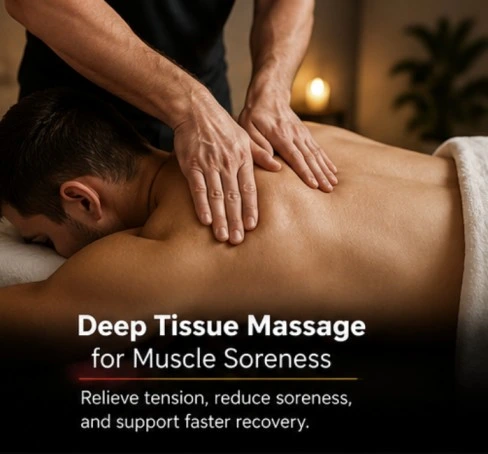
Timing is important when using deep tissue massage for recovery. While massage can help reduce soreness and stiffness, it works best when applied correctly and at the right stage of recovery.
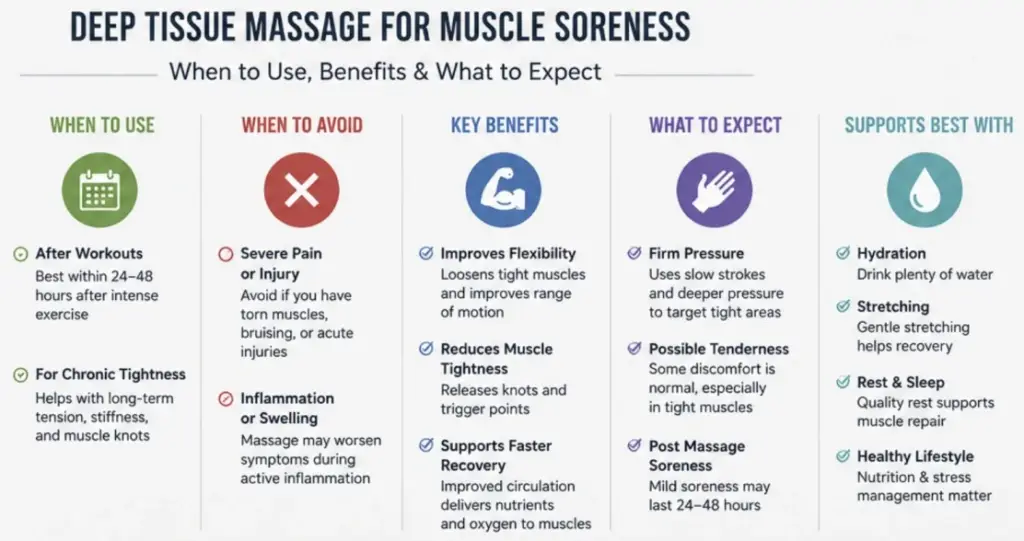
After Workouts
Many athletes and active individuals use massage therapy after workouts to help reduce delayed onset muscle soreness. This soreness often appears 24 to 48 hours after exercise and can make movement uncomfortable.
Deep tissue massage may help by:
- Improving circulation
- Reducing muscle tightness
- Supporting relaxation
- Increasing flexibility
People who regularly train often ask, does massage help with sore muscles after exercise? In many situations, the answer is yes, especially when the massage is combined with hydration, stretching, and proper rest.
However, intense pressure immediately after a heavy workout may sometimes increase sensitivity. A moderate-pressure session is usually more effective during early recovery.
For Chronic Muscle Tightness
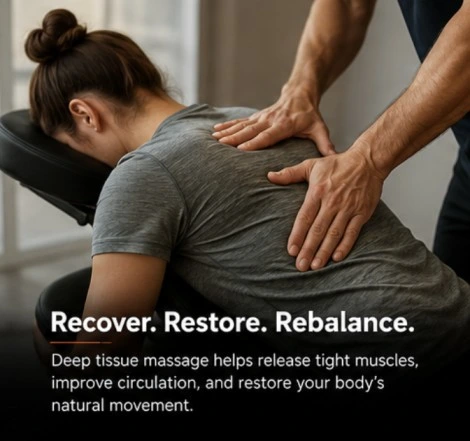
Deep tissue massage is also commonly used for long-term muscle tension. Chronic tightness can develop from:
- Sitting for long hours
- Physical labor
- Stress
- Repetitive movement
- Poor posture
Over time, muscles may develop trigger points and stiffness that limit mobility and cause discomfort. Massage therapy helps release these tight areas and restore movement.
Many people searching for massage therapy for sore muscles experience relief in:
- Neck muscles
- Shoulders
- Lower back
- Hamstrings
- Calves
Consistent massage sessions may also help improve posture and overall muscle function.
When to Avoid Deep Tissue Massage?
Although deep tissue massage has many benefits, there are situations where it should be avoided or postponed.
Severe Pain or Injury
People often ask, is it good to massage a sore muscle if the pain feels intense? The answer depends on the cause of the pain.
Massage should be avoided if there is:
- A torn muscle
- Severe bruising
- Sharp pain
- Acute injury
- Suspected fractures
Applying pressure to injured tissue may worsen symptoms and delay healing.
If pain feels severe or unusual, medical evaluation is recommended before booking a massage session.
Inflammation or Swelling
Deep tissue massage may not be appropriate during active inflammation or swelling. Excessive pressure on swollen tissue can increase irritation and discomfort.
Signs of inflammation may include:
- Redness
- Heat
- Swelling
- Throbbing pain
In these situations, rest and recovery are usually more important than aggressive massage techniques.
Benefits of Deep Tissue Massage for Muscle Recovery
Deep tissue massage offers several recovery benefits for active individuals and people dealing with chronic tension.
Improves Flexibility
Tight muscles often limit range of motion. Massage helps loosen connective tissue and reduce stiffness, allowing muscles to move more freely.
Improved flexibility may also reduce the risk of future injuries.
Reduces Muscle Tightness
One of the biggest benefits of massaging sore muscles is the release of tension and trigger points.
Tight muscles can create discomfort throughout the body. For example:
- Tight shoulders may cause headaches
- Tight hips may affect lower back pain
- Tight calves may reduce mobility
Deep tissue techniques help reduce this tension naturally.
Supports Faster Recovery
Recovery is essential after exercise and physical activity. Improved circulation helps muscles receive oxygen and nutrients more efficiently.
This process may support:
- Reduced soreness
- Better mobility
- Relaxation
- Faster muscle recovery
Many people who ask, does massage help sore muscles, report feeling less stiffness and better movement after treatment.
What to Expect During a Session?
Knowing what happens during a deep tissue massage session can help clients feel more comfortable and prepared.
Pressure Level and Sensation
Deep tissue massage uses firm pressure compared to traditional relaxation massage. Some areas may feel sensitive, especially around tight muscles and trigger points.
Communication with your massage therapist is important. Pressure should feel therapeutic, not overwhelming.
Post Massage Soreness
Mild soreness after a session is normal. This temporary discomfort usually fades within 24 to 48 hours.
Aftercare recommendations often include:
- Drinking water
- Gentle stretching
- Rest
- Light movement
These steps may help the body recover more comfortably after treatment.
How Deep Tissue Massage Affects Muscle Recovery
Muscles experience stress every day. Exercise, work, poor posture, and emotional tension can all create tightness and soreness within the body. Over time, this discomfort may reduce flexibility, mobility, and overall physical performance.
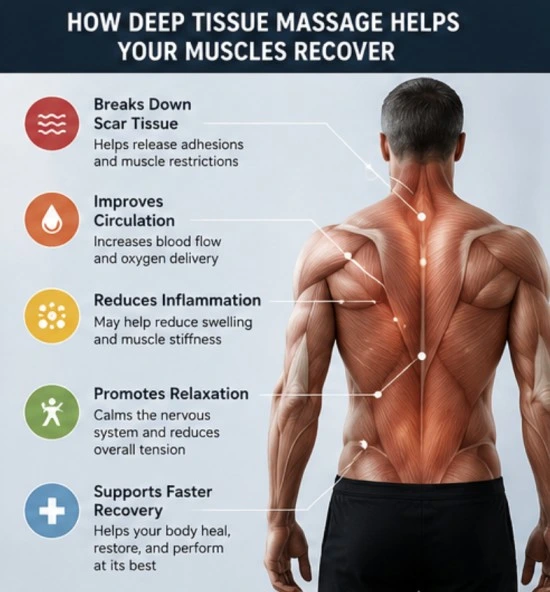
Deep tissue massage focuses on breaking up areas of tension and improving circulation in deeper muscle layers. This process may help muscles recover more efficiently after physical stress.
Many people searching for does massage help sore muscles are often surprised by how much muscle tension affects their daily comfort and energy levels.
Improves Blood Circulation
One important benefit of deep tissue massage is improved circulation. Blood flow plays a major role in muscle recovery because it delivers oxygen and nutrients to tired muscles.
Better circulation may help:
- Reduce stiffness
- Support tissue repair
- Improve flexibility
- Remove metabolic waste
For people with active lifestyles, this can help the body recover more comfortably after intense activity.
Helps Release Trigger Points
Trigger points are small areas of tight muscle fibers that may cause discomfort or referred pain throughout the body.
Deep tissue massage techniques target these tight areas directly. Releasing trigger points may help reduce:
- Neck pain
- Shoulder tension
- Back tightness
- Muscle fatigue
This is one reason why many people choose massage therapy for sore muscles as part of their wellness routine.
Does Massage Help With Delayed Onset Muscle Soreness?
Delayed onset muscle soreness, often called DOMS, usually appears after unfamiliar or intense exercise. Symptoms often peak within 24 to 72 hours.
Common signs include:
- Muscle tenderness
- Stiffness
- Reduced mobility
- Fatigue
Many athletes ask, is it good to massage sore muscles after training sessions. Studies and personal experiences suggest massage may help reduce the intensity of soreness and improve recovery comfort.
Massage does not instantly remove soreness, but it may help the body recover more effectively.
Deep Tissue Massage vs Relaxation Massage
Not all massage styles work the same way. Relaxation massage focuses on calming the nervous system and reducing stress, while deep tissue massage targets deeper muscular tension.
| Massage Type | Main Purpose |
| Relaxation Massage | Stress reduction and relaxation |
| Deep Tissue Massage | Muscle recovery and tension relief |
| Sports Massage | Athletic performance and recovery |
| Shiatsu Massage | Pressure point balancing and energy flow |
People experiencing chronic soreness or muscle tightness often benefit more from deeper therapeutic work.
Lifestyle Tips to Reduce Muscle Soreness
Massage works best when combined with healthy recovery habits.
Stay Hydrated
Water helps muscles recover and supports circulation. Dehydration may increase cramping and muscle stiffness.
Stretch Regularly
Gentle stretching may help maintain flexibility and reduce tension between massage sessions.
Prioritize Sleep
Sleep is essential for muscle recovery. Poor sleep may increase inflammation and delay healing.
Reduce Stress
Emotional stress often creates physical muscle tension. Deep tissue massage may help calm the nervous system and support relaxation.
Why Clients Choose Laguna Elite Wellness
At Laguna Elite Wellness, each session is tailored to the client’s recovery needs and comfort level.
Clients choose professional massage therapy for:
- Workout recovery
- Chronic tension
- Mobility support
- Stress relief
- Nervous system relaxation
Services are available throughout:
- Laguna Beach, California
- Palm Springs, California
- Springfield, Missouri
Whether you are an athlete, busy professional, or someone dealing with chronic tension, deep tissue massage may help your body feel lighter, looser, and more relaxed.
FAQs
Should you massage sore muscles immediately after exercise?
Gentle stretching, hydration, and proper cool-down exercises can also support recovery during the first few hours after training.
How often should you get a massage for muscle soreness?
Athletes, active individuals, or people with chronic muscle tension may benefit from weekly or biweekly sessions. Consistency often provides better long-term results than occasional treatment.
Can deep tissue massage make soreness worse?
However, excessive pain, bruising, or prolonged discomfort may indicate that the pressure was too aggressive. Communication with your therapist is important to ensure the pressure remains safe and comfortable.
What is better for sore muscles, rest or massage?
Combining both methods often produces the best recovery results. Proper hydration, sleep, nutrition, and stretching are also important for healthy muscle recovery.
How long does muscle soreness last after massage?
Drinking water, resting, and avoiding intense workouts immediately after treatment may help reduce post-massage discomfort.
Is deep tissue massage good for athletes?
Professional athletes often include massage therapy as part of their long-term recovery routine.
Can massage help reduce muscle knots?
Massage techniques help release tension within the muscle fibers and improve mobility in affected areas.
Should you drink water after a deep tissue massage?
Many therapists recommend drinking extra water for the rest of the day following a deep tissue session.
Can stress cause muscle soreness?
Deep tissue massage may help relax both the muscles and the nervous system, supporting overall stress relief.
Who should avoid deep tissue massage?
Massage should never cause severe pain or worsen an injury.