

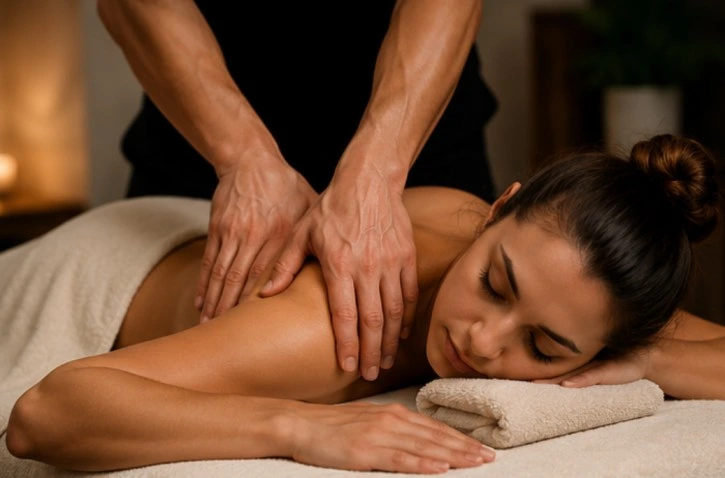
Massage therapy can improve recovery, reduce pain, and support physical performance. However, many people struggle to understand the real difference between sports massage vs deep tissue treatments. Both techniques use firm pressure and target muscle tension, but they serve different goals.
Knowing whether you need deep tissue or sports massage depends on your lifestyle, activity level, and recovery needs. Some clients want relaxation and chronic pain relief. Others need faster recovery and better athletic performance.
At Laguna Elite Wellness, we help clients choose the right massage based on their body and goals.
Key Takeaways
- Deep tissue massage focuses on chronic tension and deeper muscle layers.
- Sports massage supports athletic recovery, mobility, and performance.
- Choosing the right massage depends on pain level, activity, and recovery goals.
What Is Deep Tissue Massage?
Deep tissue massage is a therapeutic technique designed to target deeper muscle layers and connective tissues. It uses slow strokes and firm pressure to release chronic muscle tension and tightness.
This treatment is commonly used for neck pain, back pain, shoulder tension, and postural problems. Many people choose deep tissue massage vs sports massage when they experience long-term stiffness or stress-related muscle discomfort.
Techniques Used in Deep Tissue Massage
Deep tissue massage often includes:
- Slow stripping movements
- Trigger point therapy
- Cross-fiber friction
- Sustained pressure techniques
- Myofascial release
Therapists apply controlled pressure to deeper muscles while gradually breaking down adhesions and tension.
Who Should Choose Deep Tissue Massage?
Deep tissue massage may be ideal for:
- Office workers
- People with chronic pain
- Clients with tight shoulders or lower back pain
- Individuals recovering from repetitive strain
- People experiencing stress-related tension
What Is Sports Massage?
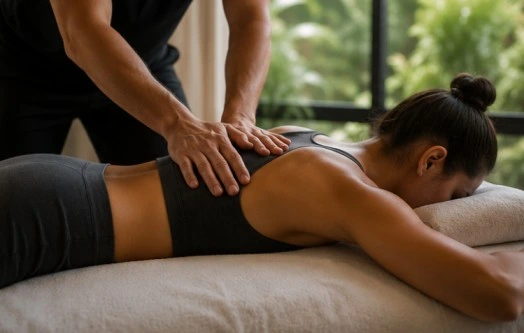
Sports massage is a performance-focused therapy designed to support athletes and active individuals. It helps improve flexibility, reduce soreness, and prepare muscles for activity.
Unlike relaxation massage, sports massage treatment focuses on movement, muscle recovery, and injury prevention.
Techniques Used in Sports Massage
Sports massage may include:
- Dynamic stretching
- Compression techniques
- Assisted movement
- Trigger point therapy
- Fast-paced muscle stimulation
The therapist often adjusts techniques based on training schedules or physical activity levels.
Who Should Choose Sports Massage?
Sports massage may benefit:
- Athletes
- Gym enthusiasts
- Runners
- Weightlifters
- People with active lifestyles
- Clients recovering from workouts
Many clients searching for what is sports massage therapy are surprised to learn it also helps non-athletes with mobility and recovery.
Key Differences Between Sports Massage and Deep Tissue Massage
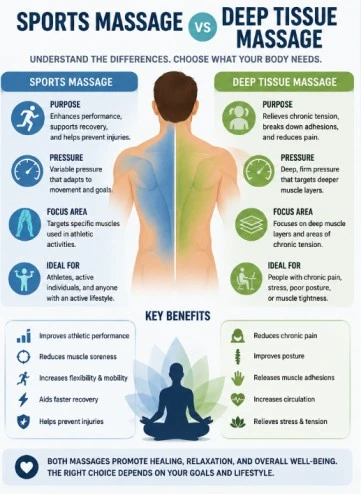
| Feature | Deep Tissue Massage | Sports Massage |
| Purpose | Chronic tension relief | Athletic recovery and performance |
| Pressure | Slow and deep | Variable and movement-focused |
| Focus Area | Deep muscle layers | Specific muscles used in activity |
| Ideal For | Chronic pain and stress | Athletes and active individuals |
Understanding the difference between sports massage and deep tissue helps clients choose the best treatment for their body.
Pressure Level and Intensity
Deep tissue massage is known for its slower and more concentrated pressure. Therapists work carefully through deeper muscle layers to release chronic tension, scar tissue, and adhesions that may have developed over time.
The pressure during deep tissue massage is usually steady and sustained. Some areas may feel slightly uncomfortable during treatment, especially if muscles are extremely tight, but the goal is controlled therapeutic relief rather than pain.
Sports massage uses a more flexible pressure approach. Depending on the client’s activity level and recovery goals, the therapist may alternate between lighter warm-up techniques and deeper muscle work.
For example, pre-event sports massage sessions often use faster and lighter stimulation to prepare muscles for movement. Post-workout sessions may involve deeper pressure to reduce soreness and improve recovery.
Movement and Application Style
One of the biggest differences between sports massage vs deep tissue massage is how the therapist approaches movement during the session.
Deep tissue massage usually focuses on slow, targeted strokes with minimal movement from the client. The treatment is designed to gradually release deep muscular restrictions while improving circulation and flexibility.
Sports massage is often much more dynamic. Therapists may incorporate:
- Assisted stretching
- Compression therapy
- Joint mobilization
- Muscle activation techniques
- Range-of-motion exercises
Because of this active approach, sports massage sessions may feel more energizing compared to deep tissue massage.
The therapist may also focus on muscle groups connected to specific physical activities. For example, runners often receive targeted treatment for calves, hamstrings, hips, and feet, while weightlifters may need additional work on shoulders, chest muscles, and lower back areas.
Another important distinction between sports massage and deep tissue therapy is treatment timing.
Deep tissue massage is commonly used for long-term maintenance and chronic pain management. Sports massage is frequently scheduled around workouts, competitions, or physically demanding activities.
Both therapies can be highly effective when matched properly to the client’s needs, goals, and lifestyle.
When to Choose Deep Tissue or Sports Massage?
Choosing between sports vs deep tissue massage depends on your physical condition, recovery goals, lifestyle, and activity level. While both therapies focus on muscle health and recovery, they are designed for different situations.
Some people need relief from chronic muscle tension caused by stress, posture issues, or repetitive movement. Others need massage therapy that supports athletic recovery, mobility, and physical performance.
Understanding when to choose each treatment can help you achieve better long-term results and improve how your body feels every day.
Best Situations for Deep Tissue Massage
Deep tissue massage is often the better choice for people dealing with long-term muscle tightness and chronic discomfort. The treatment targets deeper muscle layers where tension and adhesions commonly build over time.
Choose deep tissue massage if you experience:
- Chronic neck pain
- Tight shoulders
- Lower back stiffness
- Postural tension
- Stress-related muscle tightness
- Repetitive strain from work or daily activities
- Limited flexibility caused by muscle restriction
Many office workers choose deep tissue massage because sitting for long hours creates tension throughout the neck, shoulders, hips, and lower back.
This massage style may also help people recovering from physically demanding jobs or repetitive movement patterns that place constant stress on the muscles.
Best Situations for Sports Massage
Sports massage is designed more for movement, athletic recovery, and muscle performance. It helps active individuals maintain flexibility, reduce soreness, and support faster recovery after physical activity.
Choose sports massage if you need:
- Workout recovery
- Increased flexibility
- Injury prevention
- Muscle preparation before events
- Faster recovery after training
- Improved mobility
- Reduced muscle fatigue from exercise
Sports massage is commonly used by athletes, runners, gym enthusiasts, weightlifters, cyclists, and people with physically active lifestyles.
However, you do not need to be a professional athlete to benefit from sports massage treatment. Anyone who exercises regularly or experiences muscle fatigue from physical activity may benefit from this therapy.
Benefits of Deep Tissue Massage
Many people comparing deep tissue massage vs sports massage are primarily searching for long-term pain relief and tension reduction.
Deep tissue massage may help:
- Reduce chronic pain
- Improve posture
- Release muscle adhesions
- Increase circulation
- Lower muscle tension
- Improve range of motion
- Reduce stress-related tightness
Because this therapy focuses on deeper muscle layers, mild soreness after treatment is common. Most clients begin noticing improved flexibility and reduced tightness within 24 to 48 hours.
Benefits of Sports Massage
Sports massage focuses more on improving physical performance and recovery speed.
Sports massage may help:
- Improve athletic performance
- Increase mobility
- Reduce delayed onset muscle soreness
- Support injury prevention
- Improve recovery speed
- Increase flexibility
- Improve muscle circulation
Many active individuals schedule regular sports massage sessions as part of their long-term recovery and wellness routine.
What to Expect During Each Massage Session?
People researching deep tissue or sports massage often wonder how the actual treatment experience differs between the two therapies.
While both involve therapeutic muscle work, the pace, structure, and movement style can feel very different.
Session Duration and Structure
Both massage styles are commonly offered in 60, 90, or 120-minute sessions depending on the client’s needs.
Deep tissue massage sessions are usually slower and more focused on specific tension areas. Therapists gradually work deeper into muscles using sustained pressure and controlled techniques.
Sports massage sessions may involve movement assessments, stretching, compression, and active recovery techniques. The therapist may adjust the treatment depending on whether the client needs pre-event preparation or post-workout recovery.
Sports massage sessions often feel more dynamic and movement-oriented compared to deep tissue therapy.
Recovery and Aftercare
After either massage, proper recovery helps maximize the benefits of treatment.
Clients are usually encouraged to:
- Drink plenty of water
- Stretch lightly
- Avoid intense activity if soreness appears
- Allow muscles time to recover
- Support recovery with proper nutrition and rest
Some soreness is normal after deeper therapeutic work, especially if muscles were extremely tight before treatment.
Most clients notice improved movement, flexibility, and reduced muscle tension within one or two days after the session.
Book the Right Massage for Your Body and Goals
Whether you need chronic pain relief, athletic recovery, or improved mobility, the right massage therapy can significantly improve how your body feels and performs.
At Laguna Elite Wellness, we provide customized massage sessions designed around your recovery goals, lifestyle, and physical condition.
Our therapists carefully evaluate your needs to help you choose the treatment that best supports your body and long-term wellness.
Which Massage Is Better for You?
There is no universal answer to sports massage vs deep tissue therapy. The best treatment depends entirely on your physical condition, activity level, and recovery goals.
Based on Pain Relief Needs
If you struggle with chronic muscle tension, stiffness, poor posture, or stress-related discomfort, deep tissue massage may provide more effective long-term relief.
Its slower and deeper techniques are designed to release muscular restrictions and improve overall mobility.
Based on Activity Level and Lifestyle
If you train regularly or maintain an active lifestyle, sports massage may better support recovery, flexibility, and performance goals.
Sports massage focuses heavily on muscle function, circulation, and movement quality.
Some clients even combine both treatments depending on training schedules, stress levels, or recovery needs.
FAQs
Is sports massage only for athletes?
No. Sports massage can help anyone with muscle tension, mobility issues, or active lifestyle demands.
Can deep tissue massage help with sports injuries?
Yes. Deep tissue massage may support recovery from muscle tightness and overuse injuries when applied appropriately.
Which massage is better for muscle recovery?
Sports massage is often preferred for workout recovery and performance support.
How often should you get sports or deep tissue massage?
Many clients benefit from massage every 2–4 weeks depending on activity level, stress, and recovery needs.
Can you switch between both massage types?
Yes. Many people alternate between sports massage and deep tissue massage based on training schedules and pain levels.



2 Comments