


Most people booking a massage for the first time ask the same question: Swedish or deep tissue? Both are legitimate, well-studied techniques, but they’re built for different outcomes. Swedish massage was developed to support general circulation and relaxation. Deep tissue massage was developed to address adhesions, chronic tightness, and restricted movement in specific muscle groups.
At Laguna Elite Wellness, we build recovery plans around this distinction rather than treating every session the same way. A client six weeks out from shoulder surgery needs something different than a client managing everyday desk-job tension. Understanding what separates these two techniques helps you book the right session instead of guessing.
Key Takeaways
- Swedish massage uses lighter, gliding strokes to support circulation and calm the nervous system, while deep tissue massage uses slower, targeted pressure to reach muscle and connective tissue.
- The right choice depends on your goal: stress relief and recovery support call for Swedish, while chronic tension, old injuries, and post-surgical tightness usually respond better to deep tissue.
- Many clients benefit from both, and a licensed therapist can adjust pressure and technique within a single session as your body responds.
1. Pressure Level
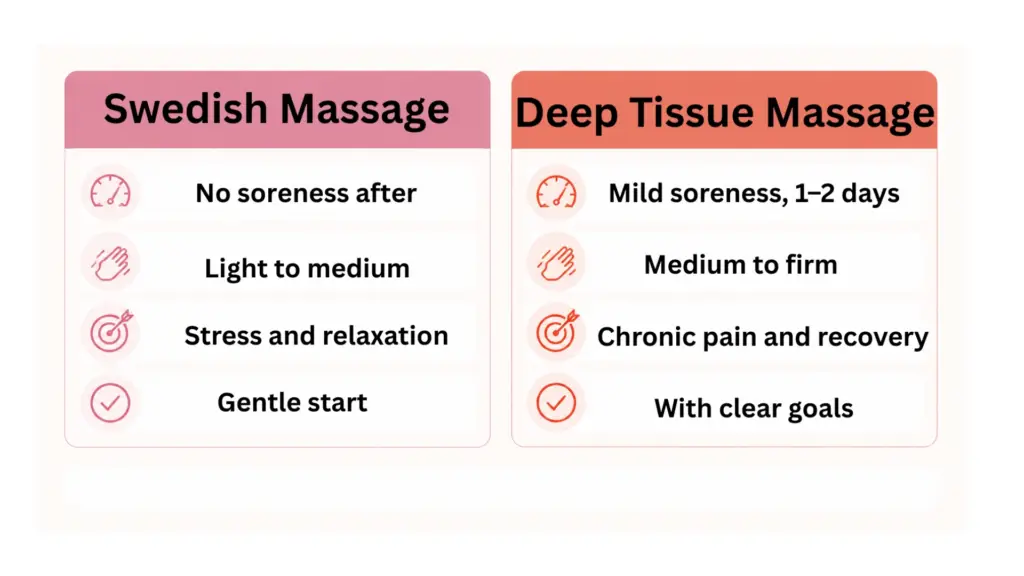
Swedish massage stays in the light to medium range. The therapist works with the natural contour of the muscle, keeping pressure consistent and comfortable throughout the session. Deep tissue massage moves into medium to firm pressure, often concentrated on a specific muscle or muscle group rather than spread evenly across the body. The pressure builds gradually as the tissue warms up and releases.
2. Massage Technique
Swedish technique relies on long gliding strokes (effleurage), kneading (petrissage), and light tapping, all moving in the direction of blood flow back toward the heart. Deep tissue technique uses slower strokes and sustained pressure, often working across the grain of the muscle fibers to reach the deeper layers and the connective tissue (fascia) surrounding them.
3. Pain and Comfort Level
Swedish massage is designed to feel comfortable from start to finish. Deep tissue massage can produce mild discomfort, particularly in areas with existing tension or scar tissue, though it should never cross into sharp or unbearable pain. Our licensed therapists check in throughout the session and adjust pressure based on your feedback.
4. Best Use
Swedish massage is well suited to general stress reduction, mild muscle fatigue, and supporting circulation after long periods of inactivity or travel. Deep tissue massage is better suited to chronic pain patterns, muscle knots, limited range of motion, and recovery from injury or surgery where scar tissue and stiffness have built up.
5. Muscle Tension Relief
Both techniques address tension, but at different depths. Swedish massage relieves surface-level tightness and helps the nervous system shift out of a stress response. Deep tissue massage targets the underlying layers where chronic knots and adhesions form, which is often where long-standing pain actually originates.
6. Recovery Time
Swedish massage typically leaves no lingering soreness, so clients can return to normal activity immediately. Deep tissue massage can cause mild soreness for a day or two afterward, similar to the feeling after a hard workout, as the tissue adjusts. This is a normal response, not a sign of injury, and it usually fades with hydration and light movement.
7. Best Choice for Beginners
For a first massage, or for clients who are unsure how their body will respond to bodywork, Swedish massage is generally the more approachable starting point. Deep tissue is still appropriate for beginners with a specific issue to address, but it helps to communicate that goal clearly so the therapist can pace the pressure accordingly.
Swedish vs Deep Tissue Massage: Quick Comparison Table
| Feature | Swedish Massage | Deep Tissue Massage |
|---|---|---|
| Main goal | Relaxation and circulation support | Muscle and connective tissue release |
| Pressure | Light to medium | Medium to firm |
| Technique | Long gliding strokes, kneading | Slow, focused, cross-fiber strokes |
| Comfort level | Comfortable throughout | Mild discomfort possible in tense areas |
| Best for | Stress, fatigue, general wellness | Chronic pain, injury recovery, tight muscles |
| Good for beginners | Yes | Yes, with clear communication |
| After-feeling | Relaxed, no soreness | Possible mild soreness for 1–2 days |
Which Massage Is Better for Stress?
Swedish massage has the edge here. The slower, rhythmic strokes activate the parasympathetic nervous system, the part of the body responsible for winding down after stress. Heart rate and muscle tension tend to drop noticeably during a Swedish session, and massage has a measurable effect on stress hormones, which is why it’s often recommended for clients dealing with high stress loads, poor sleep, or general burnout rather than a specific injury.
Which Massage Is Better for Muscle Pain?

Deep tissue massage is generally more effective for muscle pain, particularly pain tied to chronic tightness, overuse, or old injuries. Because the technique reaches the deeper muscle layers and fascia, it can address adhesions that lighter pressure won’t touch. For pain connected to a recent injury or surgery, deep tissue work is usually paired with a broader recovery plan rather than used on its own.
Who Should Choose Swedish Massage?

Swedish massage tends to be the better fit for clients who are new to massage, currently under significant stress, recovering from travel or a demanding week, or looking for a technique they can receive regularly without soreness. If you want a closer look at the strokes involved, our guide to Swedish massage techniques breaks each one down. It’s also commonly used as a complement to other recovery work, since the circulation benefits support the body’s ability to heal between more intensive sessions.
Who Should Choose Deep Tissue Massage?

Deep tissue massage is typically the better fit for clients managing chronic tension, limited range of motion, sports-related tightness, or muscle pain connected to a past injury or surgery. It’s also a common component of our deep tissue and post-surgical recovery sessions, where the goal is breaking down scar tissue and restoring normal movement patterns over time, always in coordination with a client’s physician or physical therapist.
Can You Combine Swedish and Deep Tissue Massage?
Yes, and it’s more common than most people expect. A single session can open with Swedish strokes to warm the muscles and calm the nervous system, then shift into deep tissue work on specific areas that need it. This approach lets the body ease into deeper pressure rather than starting cold, and it’s a technique our therapists use often when a client’s needs don’t fall neatly into one category.
Safety Tips Before Booking a Massage
When to Avoid Deep Tissue Massage
Deep tissue massage isn’t appropriate for every situation. Clients with acute injuries in the first 48–72 hours, active infections, blood clotting disorders, certain cardiovascular conditions, or recent fractures should hold off until a physician has cleared them for bodywork. Deep pressure directly over a healing surgical site is also generally avoided until the tissue has progressed further in recovery.
When to Talk to Your Massage Therapist First
Always disclose recent surgeries, current medications, chronic conditions, and areas of acute pain before your session starts. This isn’t a formality. It directly shapes which technique and how much pressure your therapist uses, and it’s the difference between a session that supports your recovery and one that sets it back.
Book the Right Massage for Your Body

Laguna Elite Wellness brings licensed massage therapy directly to you, whether that’s home, a hotel, or an office, across Laguna Beach, Palm Springs, Springfield, and Sarasota. If you’re not sure whether Swedish, deep tissue, or a combination of both fits your situation, our therapists build the session around your recovery goals rather than a one-size-fits-all approach. Browse our services or check pricing across locations to get started.
Final Thoughts
Neither technique is universally “better.” Swedish massage and deep tissue massage solve different problems, and the right one depends on what your body needs right now, not on which sounds more intense. If you’re dealing with everyday stress, Swedish is likely the right call. If you’re managing chronic pain, an old injury, or post-surgical stiffness, deep tissue is worth the conversation. And if you’re not sure, that’s exactly what a consultation with a licensed therapist is for.
Frequently Asked Questions
Is deep tissue massage better than Swedish massage?
Neither is better overall. Deep tissue massage is more effective for chronic pain and muscle tightness, while Swedish massage is more effective for stress relief and relaxation. The better choice depends on your specific goal.
Does deep tissue massage hurt more than Swedish massage?
Deep tissue massage can involve mild discomfort in tense areas, especially during the first few sessions, while Swedish massage is designed to feel comfortable throughout. Deep tissue should never cause sharp pain, and pressure can always be adjusted.
How long does a Swedish or deep tissue massage take?
Both are typically offered in 60- or 90-minute sessions. Deep tissue sessions sometimes run slightly longer if multiple problem areas need focused attention.
Which massage is better for back pain?
It depends on the cause. Chronic back tension from posture or old injury usually responds better to deep tissue work, while back pain tied to stress or general tightness can improve with Swedish massage. A therapist can assess which applies to your situation.
Can I get deep tissue massage on my first visit?
Yes, as long as you communicate your goals and any relevant medical history beforehand. Your therapist can pace the pressure so your first deep tissue session is effective without being overwhelming.
How often should you get Swedish or deep tissue massage?
For general stress management, monthly Swedish sessions are common. For active recovery from an injury or chronic pain, weekly or biweekly deep tissue sessions are more typical until symptoms improve, at which point frequency usually tapers off.
Should I drink water after a deep tissue massage?
Yes. Staying hydrated after a deep tissue session supports the body’s natural process of flushing out metabolic waste released from the muscles, and it can reduce next-day soreness.