If you live with tingling, burning, or numb feet, you've probably already asked your search bar this exact question. The short answer: gentle foot massage may help ease some neuropathy symptoms for many people, but it isn't a cure, and it isn't right for every foot or every condition. Below, we break down what the research actually shows, seven real benefits, the safest techniques, and exactly when to skip massage and call your doctor instead.
Key Takeaways
- Foot massage may help reduce pain, ease muscle tension, and support circulation for people with mild to moderate neuropathy, but current evidence is promising, not conclusive.
- Diabetic neuropathy affects roughly half of people who live with chronic diabetes, so safety precautions like light pressure and skin checks matter more than technique alone.
- People with open wounds, active infection, blood clots, or uncontrolled diabetes should talk to a doctor before starting any foot massage routine, including professional massage therapy.
Neuropathy in the feet can turn ordinary things like walking across the room, putting on socks, or standing at the sink into something uncomfortable or even painful. It's no surprise that so many people search for gentle, non-drug ways to find relief, and foot massage is consistently one of the first things people try.
The good news is that foot massage does have some real science behind it, particularly for pain relief, circulation, muscle tension, and sleep quality. The important caveat is that neuropathy is a nerve condition, not a sore-muscle condition, so the wrong technique or too much pressure can do more harm than good, especially for people managing diabetes or reduced sensation. This guide walks through what foot massage can realistically offer, which techniques are considered safest, and the specific warning signs that mean it's time to see a doctor instead of reaching for the lotion.
What Is Neuropathy in the Feet?
Peripheral neuropathy happens when the nerves that carry signals between your feet, legs, and brain become damaged or irritated. Because these nerves run the farthest distance in your body, the feet are usually the first place symptoms show up.
Peripheral neuropathy affects an estimated 2.4% of people worldwide, and that number climbs to around 8% among older adults. Diabetes is by far the leading cause, damaging nerves in up to half of people living with the condition over time. Other common causes include chronic alcohol use, vitamin B deficiencies, autoimmune disease, chemotherapy, certain infections, and inherited nerve disorders.
Common Symptoms of Foot Neuropathy
Neuropathy doesn't feel the same for everyone, but a few patterns show up again and again:
- Numbness or a "sock-like" loss of feeling, often starting at the toes and spreading upward
- Tingling, prickling, or "pins and needles" sensations
- Burning or sharp, shooting pain in the toes or soles
- Increased sensitivity to touch, where even bedsheets feel uncomfortable
- Muscle weakness or an unsteady, off-balance walk
- Cramping or stiffness in the feet and calves
If any of these symptoms are new, worsening, or paired with wounds that won't heal, that's a signal to see a doctor before starting a home massage routine.
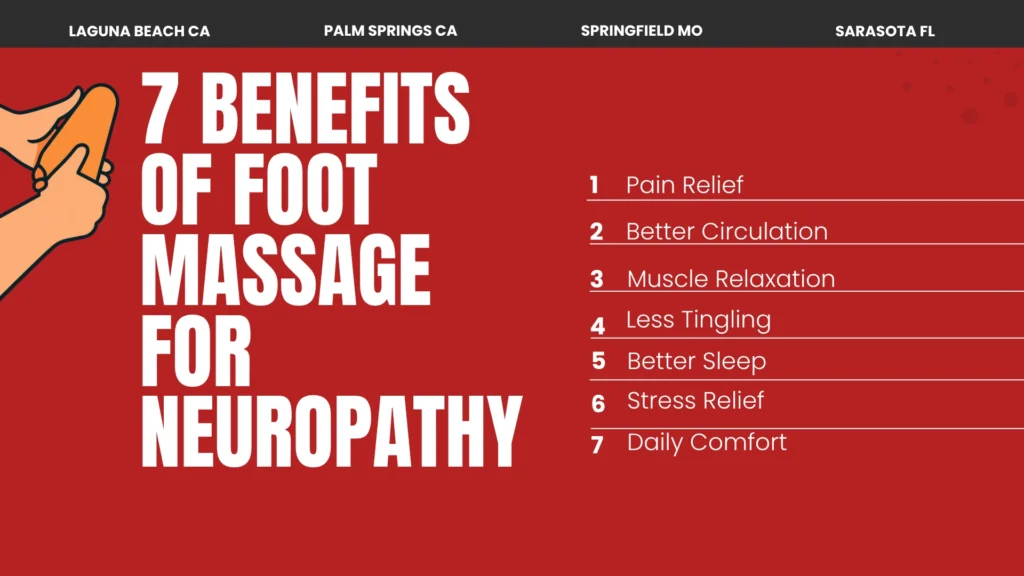
7 Benefits of Foot Massage for Neuropathy
1. May Help Reduce Foot Pain
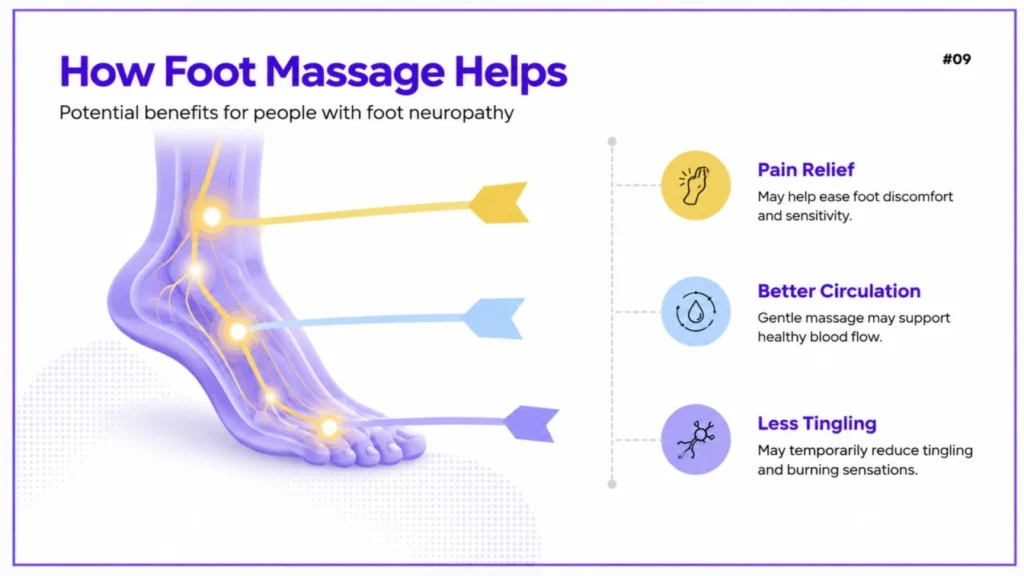
A 2022 clinical study found that foot massage therapy had a measurable effect in reducing discomfort from diabetic peripheral neuropathy. Massage is thought to help by stimulating nerve pathways that compete with pain signals, essentially giving the brain something else to focus on besides the pain itself. This is also why massage is often recommended for the sharp, shooting nerve pain some people feel in their toes.
2. Supports Better Blood Flow
Poor circulation is common in neuropathy, especially diabetic neuropathy, and it can slow healing and worsen numbness. Gentle massage strokes encourage blood to move more freely through the small vessels of the feet, which may support tissue health over time. This is one reason a 2020 systematic review linked foot massage with reduced symptoms related to foot ulcers in people with diabetes.
3. Helps Relax Tight Muscles
Neuropathy often changes the way people walk and stand to avoid pain, which can leave the muscles in the feet, arches, and calves chronically tight. Working through the soft tissue of the foot can release some of that built-up tension, which in turn can ease the achy, cramped feeling many people describe alongside their nerve symptoms.
4. May Reduce Tingling and Burning Feelings
The tingling and burning sensations of neuropathy are caused by irritated nerve fibers misfiring. Some research suggests that light, rhythmic touch can help "reset" how those signals are processed, temporarily easing the burning or prickling feeling. It isn't a permanent fix, but many people report meaningful short-term relief after a session.
5. Supports Better Sleep
Neuropathy pain is notorious for getting worse at night, which makes it harder to fall and stay asleep. A published study on foot massage for peripheral neuropathy-related pain found improvements in both pain levels and sleep quality among patients who received regular massage. Better sleep, in turn, tends to improve pain tolerance the next day.
6. Helps Lower Stress
Chronic pain and stress feed each other, and neuropathy is no exception. Massage is well documented for lowering cortisol, the body's primary stress hormone, and supporting the body's relaxation response. Lower stress levels can make neuropathy symptoms feel more manageable day to day, even if the underlying nerve activity hasn't changed.
7. May Improve Daily Comfort
Beyond the measurable clinical benefits, most people simply say their feet feel better after a gentle massage: less stiff, less "foggy," and easier to walk on. For many people managing a chronic condition, that improvement in daily comfort and quality of life matters just as much as any single statistic.
Best Foot Massage Techniques for Neuropathy
Not all massage techniques are appropriate for nerve-damaged feet. The safest approaches use light-to-moderate pressure and avoid the deep, aggressive work used for sore athletic muscles.
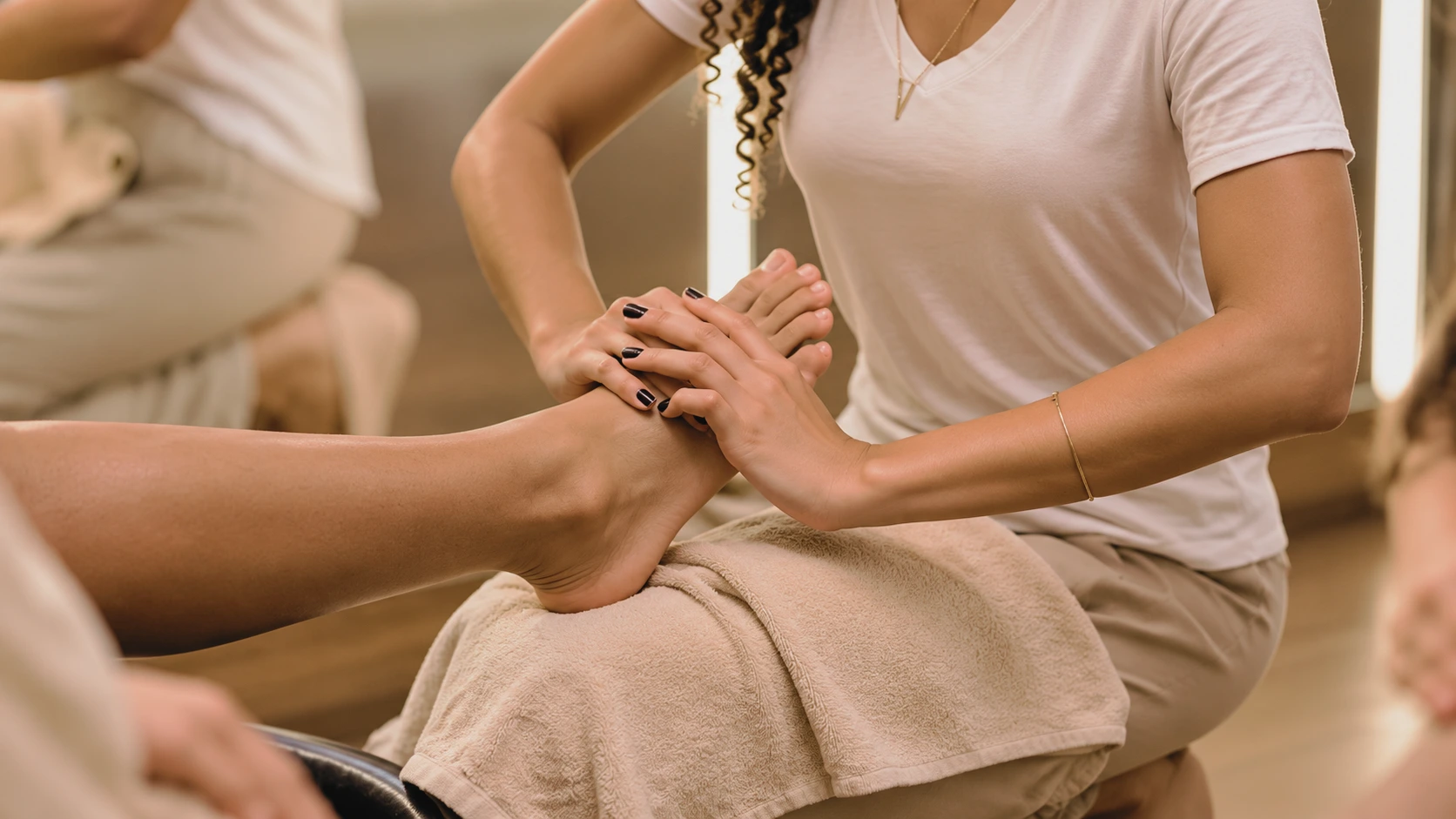
Gentle Rubbing Massage
Also called effleurage, this is a slow, flat-handed stroking motion along the top and sides of the foot. It's considered one of the safest starting points because it improves circulation without applying deep pressure to sensitive nerves.
Light Circular Pressure
Small, slow circles applied with the thumbs along the arch and heel can help release tension without overstimulating already-irritated nerves. This works well as a follow-up to gentle rubbing.
Toe and Arch Massage
Because neuropathy often starts at the toes, gently working each toe individually, along with light pressure through the arch, can target the areas where symptoms are usually most intense. This should always be done with a very light touch, since the toes are often the most sensitive area.
Warm Oil Foot Massage
Warm (not hot) massage oil can help the hands glide more smoothly and adds a layer of comfort, but temperature needs to be checked carefully. People with neuropathy often can't accurately feel heat, so testing the oil on your wrist first, rather than your foot, is essential.
Professional Massage vs Self-Massage
Self-massage is a reasonable way to manage mild symptoms between sessions, but it has real limits. A trained massage therapist can adjust pressure in real time, recognize warning signs like poor circulation or skin changes, and tailor the right technique to your specific type of neuropathy. For anyone with diabetes, circulation issues, or moderate-to-severe symptoms, professional care is the safer choice.
Foot Massage for Neuropathy: Quick Table
| Massage Option | How It May Help | Best For |
|---|---|---|
| Gentle rubbing | Improves circulation, calms nerve sensitivity | First-time or very sensitive feet |
| Circular pressure | Releases tension in the arch and heel | Tight, achy feet |
| Toe massage | Targets tingling and burning at the toes | Toe-focused symptoms |
| Arch massage | Eases cramping and stiffness | Cramping or fatigue |
| Warm oil massage | Adds comfort and improves glide | Dry or stiff skin |
| Professional massage | Combines multiple techniques safely | Diabetes, moderate-severe symptoms |
Safety Tips Before Massaging Neuropathy Feet
Start With Light Pressure
Because neuropathy can dull sensation, it's easy to press harder than intended without realizing it. Always start lighter than feels necessary and increase pressure gradually, if at all.
Check Your Feet Before and After Massage
Look over both feet before and after every session for redness, cuts, blisters, or swelling. Reduced sensation means an injury can go unnoticed for days, so a quick visual check is one of the simplest safety habits.
Avoid Massage Over Swelling, Wounds, or Infection
Never massage directly over an open wound, ulcer, area of active infection, or swelling. This can spread infection or damage fragile tissue that's already struggling to heal.
Ask a Doctor If You Have Diabetes or Poor Circulation
Diabetic neuropathy carries additional risk, including a higher chance of foot ulcers and, in severe cases, complications like gangrene. Anyone with diabetes, poor circulation, or a history of blood clots should get medical clearance before starting a massage routine.
How Often Should You Massage Feet for Neuropathy?
For most people with mild symptoms, a short 10 to 15 minute session, 3 to 5 times per week, is a reasonable starting point. Some people benefit from daily gentle massage, while others do better with professional sessions every one to two weeks combined with lighter self-massage at home. There's no universal schedule, so it's worth paying attention to how your feet respond and adjusting from there, ideally with input from a doctor or massage therapist.
When Should You Avoid Foot Massage?
Skip foot massage, and check with a doctor first, if you notice any of the following:
- Open wounds, ulcers, or active skin infections
- Signs of a blood clot, such as sudden swelling, warmth, or redness in one leg
- Uncontrolled diabetes or unexplained changes in foot color or temperature
- Severe pain that worsens with any touch
- Recent foot surgery or a fracture that hasn't fully healed
When in doubt, it's always safer to check with a healthcare provider before starting, especially if you're new to managing neuropathy.
Book a Gentle Foot Massage for Better Comfort

If your feet could use relief but you're not sure where to start, working with a trained therapist takes the guesswork out of pressure, technique, and timing. At Laguna Elite Wellness, we bring gentle, mobile massage therapy directly to you, which is especially helpful if standing, walking, or driving to an appointment is difficult because of neuropathy or a related injury. We offer this care in Laguna Beach, Palm Springs, Springfield, Missouri, and Sarasota, Florida.
You can view our current rates on the pricing page or go ahead and book your appointment online today. If you have questions first, our FAQ page covers what to expect, or you can contact us directly.
Final Thoughts
Foot massage isn't a cure for neuropathy, but for many people it's a genuinely helpful, low-risk way to ease pain, support circulation, and improve daily comfort, especially when it's done gently and safely. The key is matching the technique to your specific symptoms and health history, starting light, and knowing when a condition like diabetes or an open wound means it's time to involve a doctor or a trained massage therapist instead of going it alone.