
Swedish massage is the most popular massage style in the world — and for good reason. Its flowing, soothing strokes have introduced millions of people to the healing power of therapeutic touch. But behind that relaxing experience lies a precise set of techniques, each with its own purpose and benefit.
At Laguna Elite Wellness, our licensed therapists bring the full Swedish massage experience directly to your home, hotel, or vacation rental across Laguna Beach CA, Palm Springs CA, Springfield MO and Sarasota FL. In this guide, we’ll break down the seven core Swedish massage techniques, explain how each one works, and show you exactly how they help your body relax and recover.
Key Takeaways
- Swedish massage is built on seven core techniques — effleurage, petrissage, friction, tapotement, vibration, rolling, and wringing — each serving a specific therapeutic purpose.
- Together, these techniques improve circulation, release muscle tension, and trigger deep relaxation, making Swedish massage ideal for stress relief and overall wellness.
- It’s gentle, fully customizable, and perfect for beginners, making it the ideal entry point into professional massage therapy.
If you’ve ever had a massage, there’s a good chance it was a Swedish massage — or at least heavily influenced by it. Developed in the early 19th century, Swedish massage laid the foundation for much of modern Western massage therapy, and it remains the gold standard for relaxation and general wellness today.
What makes Swedish massage so effective isn’t just the gentle pressure or the calming atmosphere — it’s the thoughtful combination of distinct techniques, each designed to achieve a specific result. Some warm up the muscles, others release deep tension, and still others stimulate circulation or soothe the nervous system.
Understanding these techniques helps you appreciate what’s happening during your session and choose the right massage for your needs. Let’s explore the seven core Swedish massage techniques and the benefits each one brings.
What Is Swedish Massage?
Swedish massage is a gentle, full-body massage style that uses a series of flowing techniques to relax muscles, improve circulation, and promote overall well-being. It typically uses light to moderate pressure, making it accessible and comfortable for nearly everyone — from first-timers to seasoned massage enthusiasts.
The goal of Swedish massage is twofold: to relax the body physically by easing muscle tension and improving blood flow, and to calm the mind by activating the body’s natural relaxation response. Therapists use massage oils to allow smooth, gliding movements across the skin, working systematically across the major muscle groups.
Unlike deeper or more specialized techniques, Swedish massage prioritizes comfort and relaxation. It’s the foundation from which many other massage styles are derived, and you can see how it compares to other treatments in our complete guide to the different types of massages.
7 Swedish Massage Techniques You Should Know
1. Effleurage: Long Gliding Strokes
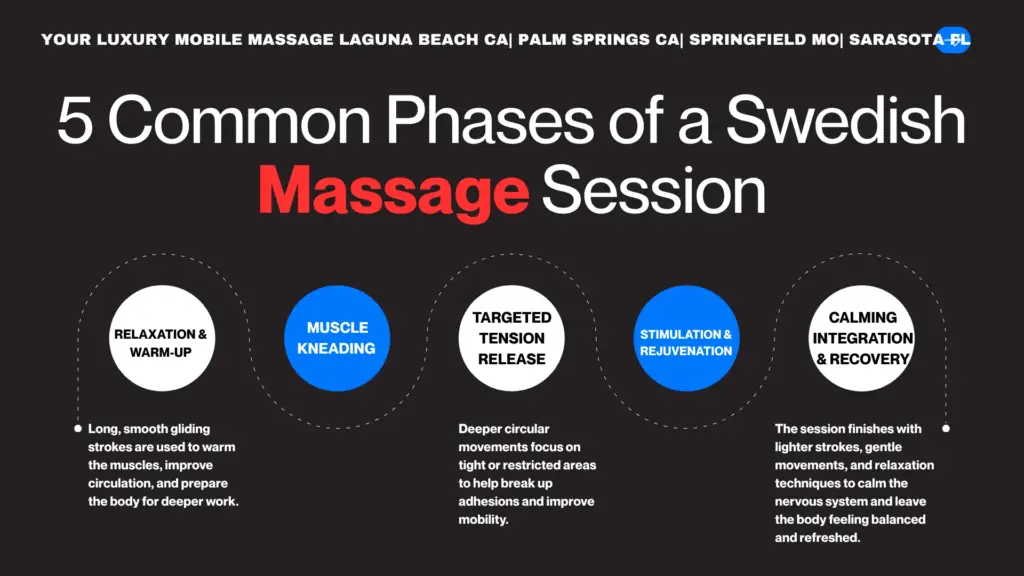
Effleurage is the signature opening technique of any Swedish massage. The therapist uses long, smooth, gliding strokes — usually with the palms and fingers — to warm up the muscles and spread oil evenly across the skin.
These flowing movements ease the body into the session, calm the nervous system, and begin stimulating circulation. Effleurage is also used to transition between areas of the body and to close the session, creating a sense of continuity and deep relaxation throughout.
2. Petrissage: Kneading the Muscles
Petrissage involves kneading, squeezing, and rolling the muscles — much like kneading dough. This technique reaches deeper into the muscle tissue than effleurage, helping to release knots, improve flexibility, and boost circulation.
By lifting and compressing the muscles, petrissage flushes out metabolic waste, brings fresh blood to the area, and relieves built-up tension. It’s especially effective for areas that hold a lot of stress, like the shoulders, neck, and back.
3. Friction: Small Deep Circular Movements
Friction uses focused, deep, circular movements applied with the thumbs, fingertips, or palms. The therapist works across specific areas to generate warmth and break down adhesions — those stubborn knots and bands of tension that build up in overworked muscles.
This technique targets deeper layers of tissue and is particularly useful around joints and areas of chronic tightness. The warmth it creates also helps increase blood flow and prepare the muscles for deeper relaxation.
4. Tapotement: Light Tapping Movements
Tapotement is the rhythmic tapping or percussion technique you may have seen in films — a series of quick, light strikes using the edges of the hands, cupped palms, or fingertips. It’s invigorating rather than relaxing, and is used to stimulate the muscles and nerves.
This technique can energize the body, improve muscle tone, and increase circulation. Therapists typically use it in shorter bursts and adjust the intensity to your comfort, often incorporating it toward the middle of a session.
5. Vibration: Gentle Shaking Motion
Vibration involves the therapist using their hands or fingertips to create a gentle shaking or trembling motion across the muscles. This subtle technique helps loosen tight muscles, stimulate nerves, and promote relaxation.
Vibration is especially soothing for areas that feel tense or fatigued, and it can help release tension that other techniques haven’t fully addressed. The rhythmic motion has a calming, almost meditative effect on the body.
6. Rolling: Lifting and Rolling Soft Tissue
Rolling is a technique where the therapist gently lifts and rolls the soft tissue between their hands. This movement stretches and mobilizes the muscles, improves flexibility, and enhances circulation in the area being worked.
By gently manipulating the tissue, rolling helps release tension and improve the elasticity of the muscles. It’s a gentle yet effective way to keep the muscles supple and responsive throughout the session.
7. Wringing: Twisting Muscles Gently
Wringing involves gently twisting the muscles in opposite directions, similar to wringing out a towel. This technique stretches the muscle fibers, stimulates blood flow, and helps release deep-seated tension.
Wringing is particularly effective on the limbs — the arms, legs, and thighs — where larger muscle groups benefit from the gentle stretching and circulation boost. It leaves the muscles feeling loose, warm, and relaxed.
Swedish Massage Techniques and Benefits: Quick Table
| Swedish Massage Technique | How It Works | Main Benefit |
| Effleurage | Long, gliding strokes across the skin | Warms muscles & promotes relaxation |
| Petrissage | Kneading and squeezing the muscles | Releases knots & improves circulation |
| Friction | Small, deep circular movements | Breaks down adhesions & tight spots |
| Tapotement | Rhythmic light tapping or percussion | Stimulates & energizes muscles |
| Vibration | Gentle shaking or trembling motion | Loosens tension & soothes nerves |
| Rolling | Lifting and rolling soft tissue | Improves flexibility & circulation |
| Wringing | Gently twisting the muscles | Releases deep tension in the limbs |
Main Benefits of Swedish Massage
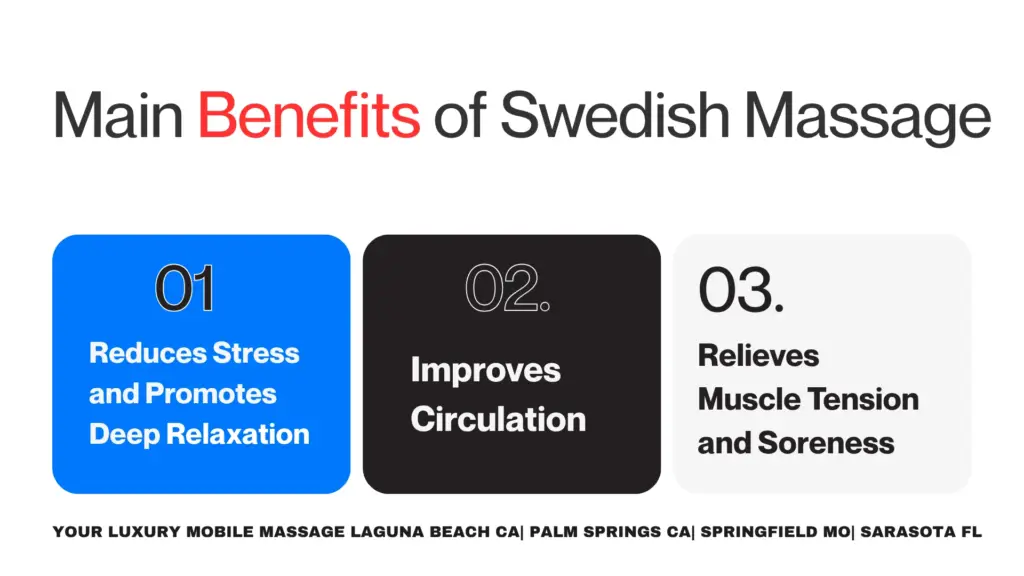
The combined effect of these seven techniques makes Swedish massage one of the most beneficial treatments for overall wellness. Physically, it improves blood circulation, which delivers oxygen and nutrients to your tissues while helping flush out metabolic waste. This boost in circulation supports faster muscle recovery and reduced stiffness.
Swedish massage is also exceptional for stress relief. By activating the parasympathetic nervous system — the body’s “rest and digest” mode — it lowers cortisol levels, slows the heart rate, and creates a profound sense of calm. Many clients report better sleep, improved mood, and reduced anxiety after a session.
On top of that, Swedish massage eases muscle tension, improves flexibility, and can help relieve everyday aches and pains. As the Mayo Clinic notes, massage is a valuable tool for reducing stress, pain, and muscle tension — making Swedish massage a wonderful investment in both body and mind.
What Happens During a Swedish Massage Session?
Before the Massage
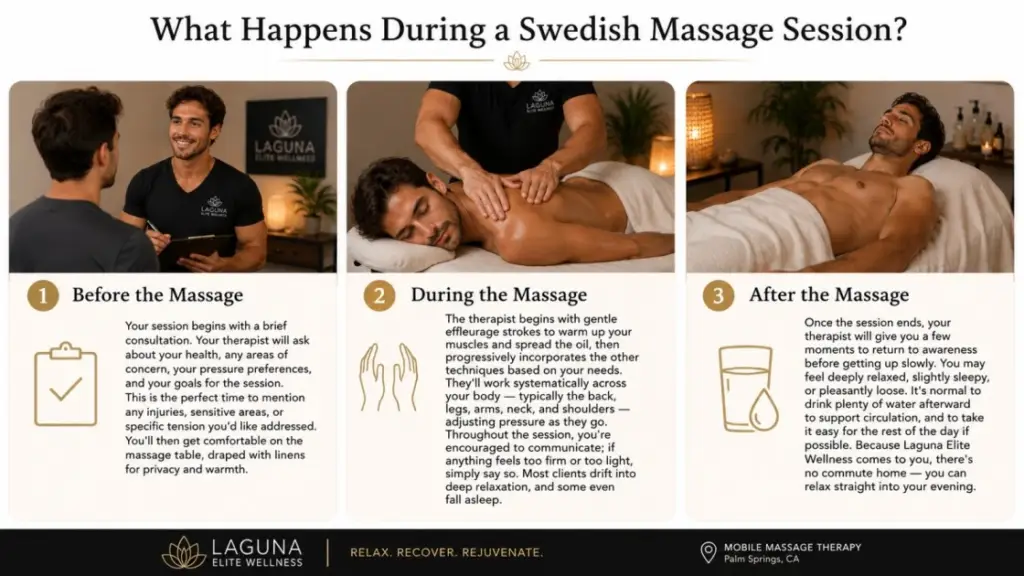
Your session begins with a brief consultation. Your therapist will ask about your health, any areas of concern, your pressure preferences, and your goals for the session. This is the perfect time to mention any injuries, sensitive areas, or specific tension you’d like addressed. You’ll then get comfortable on the massage table, draped with linens for privacy and warmth.
During the Massage
The therapist begins with gentle effleurage strokes to warm up your muscles and spread the oil, then progressively incorporates the other techniques based on your needs. They’ll work systematically across your body — typically the back, legs, arms, neck, and shoulders — adjusting pressure as they go. Throughout the session, you’re encouraged to communicate; if anything feels too firm or too light, simply say so. Most clients drift into deep relaxation, and some even fall asleep.
After the Massage
Once the session ends, your therapist will give you a few moments to return to awareness before getting up slowly. You may feel deeply relaxed, slightly sleepy, or pleasantly loose. It’s normal to drink plenty of water afterward to support circulation, and to take it easy for the rest of the day if possible. Because Laguna Elite Wellness comes to you, there’s no commute home — you can relax straight into your evening.
Who Is Swedish Massage Best For?
Swedish massage is one of the most universally suitable massage styles, making it an excellent choice for a wide range of people. It’s particularly ideal for:
- First-time massage clients who want a gentle, comfortable introduction to massage therapy.
- Anyone managing stress or anxiety who needs deep relaxation and nervous system reset.
- People with general muscle tension from desk work, travel, or everyday life.
- Those seeking better sleep and an overall sense of calm and well-being.
- Clients who prefer lighter pressure and find deeper techniques uncomfortable.
If your goals are relaxation, stress relief, and general wellness rather than intensive deep-tissue work, Swedish massage is almost always the right call. Our therapists can also blend techniques to address specific needs while keeping the experience gentle and soothing.
Swedish Massage vs Other Massage Types
Swedish Massage vs Deep Tissue Massage
The main difference comes down to pressure and purpose. Swedish massage uses lighter pressure focused on relaxation and circulation, while deep tissue massage uses firm, sustained pressure to target chronic tension and deep muscle knots. Choose Swedish for relaxation and stress relief; choose deep tissue for persistent pain or postural issues. Many clients alternate between the two depending on their needs.
Swedish Massage vs Sports Massage
Sports massage is tailored specifically for athletes and active individuals, focusing on injury prevention, recovery, and performance. It often incorporates stretching and targets sport-specific muscle groups with firmer techniques. Swedish massage, by contrast, is gentler and aimed at full-body relaxation. To understand the firmer end of the spectrum, see our comparison of Sports Massage vs Deep Tissue Massage.
Swedish Massage vs Hot Stone Massage
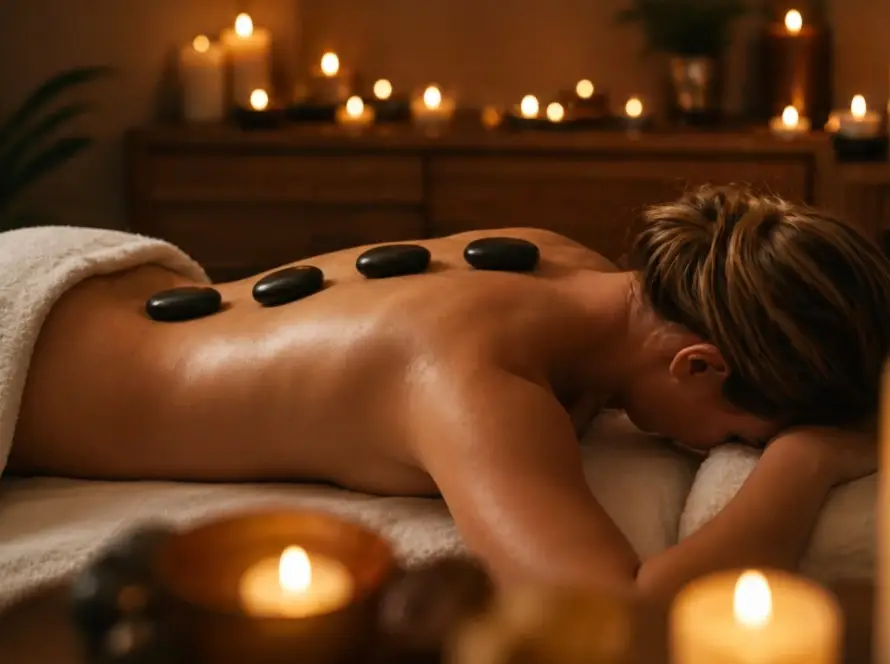
Hot stone massage builds on Swedish techniques but adds heated basalt stones to deepen relaxation and penetrate the muscles with warmth. If you love the soothing flow of Swedish massage but want an even more luxurious, deeply relaxing experience, hot stone is a natural upgrade. Learn more in our overview of the Top 10 Benefits of Hot Stone Massage.

Safety Tips Before Getting a Swedish Massage
While Swedish massage is gentle and safe for most people, a few simple precautions help ensure the best possible experience:
- Communicate openly with your therapist about your health, injuries, and pressure preferences before and during the session.
- Stay hydrated before and after your massage to support circulation and recovery.
- Avoid heavy meals right before your session — a light snack is fine.
- Mention medical conditions such as pregnancy, blood clots, skin conditions, or recent surgeries, as these may require adjustments or medical clearance.
- Don’t push through pain — Swedish massage should feel relaxing, not painful. Speak up if anything feels uncomfortable.
Tip: If you’re pregnant, recovering from an injury, or managing a chronic health condition, check with your doctor before booking, and always choose a licensed, professional therapist who can adapt the session safely to your needs.
Book a Relaxing Swedish Massage Today

Ready to experience the soothing power of Swedish massage for yourself? At Laguna Elite Wellness, our licensed, insured therapists bring the complete five-star experience directly to your door — professional table, premium linens, curated oils, and expert hands trained in every Swedish technique.
Whether you’re unwinding after a long week, recovering from travel, or simply treating yourself to some well-deserved relaxation, we’ll tailor your therapeutic massage session to exactly what your body needs — across Laguna Beach CA, Palm Springs CA, and Springfield MO.
Book your Swedish massage today — same-day appointments are often available.
Final Thoughts
Swedish massage may be gentle, but there’s real artistry and science behind it. The seven core techniques — effleurage, petrissage, friction, tapotement, vibration, rolling, and wringing — work together to relax your muscles, boost your circulation, and calm your mind in a way few other treatments can match.
Whether you’re brand new to massage or a longtime enthusiast, Swedish massage offers a perfect blend of comfort, relaxation, and genuine therapeutic benefit. It’s the ideal way to reset, recharge, and reconnect with your body.
And with Laguna Elite Wellness, that world-class experience is only an appointment away — delivered right to wherever you call home. Treat yourself; your body and mind will thank you.
Frequently Asked Questions
Which Swedish massage technique is best for relaxation?
Effleurage — the long, gliding strokes — is the most relaxing Swedish massage technique. Its smooth, flowing motion calms the nervous system, eases the body into the session, and creates that signature sense of deep relaxation. It’s used at both the beginning and end of a session to bookend the experience with calm. That said, the combination of all seven techniques is what makes Swedish massage so deeply soothing overall.
Which Swedish massage stroke is used at the start of a session?
Effleurage is almost always the first technique used in a Swedish massage. These long, gentle gliding strokes warm up the muscles, spread the massage oil evenly, and help your body and nervous system ease into the session. It sets a calm, relaxing tone before the therapist moves on to deeper techniques like petrissage and friction.
Can Swedish massage techniques help with tight shoulders?
Absolutely. Tight shoulders respond very well to Swedish massage, particularly petrissage (kneading) and friction (deep circular movements), which target knots and release built-up tension. The improved circulation and muscle relaxation can relieve the stiffness that commonly comes from desk work, stress, and poor posture. Let your therapist know your shoulders need attention, and they’ll focus the techniques accordingly.
Are Swedish massage techniques painful?
No — Swedish massage is designed to be relaxing, not painful. It uses light to moderate pressure, and the techniques feel soothing rather than intense. You might feel slight pressure when the therapist works on knots or tense areas, but it should never be sharply painful. Always communicate with your therapist; they’ll adjust the pressure to keep you comfortable throughout the session.
How often should you get a Swedish massage?
For general relaxation and stress management, once every two to four weeks works well for most people. If you’re using massage to manage ongoing tension or stress, weekly sessions can be beneficial at first. Even a monthly Swedish massage provides meaningful cumulative benefits for circulation, sleep, and overall well-being. Your therapist can recommend a schedule based on your lifestyle and goals.
Is Swedish massage good for beginners?
Yes — Swedish massage is the ideal choice for beginners. Its gentle pressure, flowing techniques, and focus on relaxation make it comfortable and accessible for anyone new to massage therapy. It introduces your body to therapeutic touch without the intensity of deeper styles, and your therapist can easily adjust the experience to your comfort level. Many people start with Swedish and explore other styles as they become more familiar.
What should I wear for a Swedish massage?
During a Swedish massage, you typically undress to your comfort level and are draped with linens or towels throughout the session, with only the area being worked on exposed at any time. Most people undress fully or down to their underwear, but you should only undress to the point where you feel comfortable. Your therapist will leave the room while you get ready and ensure your privacy and comfort at all times.