

You’ve just finished a relaxing massage, and your therapist reminds you to drink plenty of water to “flush out the toxins.” It’s one of the most common pieces of post-massage advice — but what does it actually mean? What toxins are released after massage, and how does your body process them?
At Laguna Elite Wellness, our licensed therapists hear this question all the time. In this guide, we’ll explain what really happens in your body after a massage, which waste products are involved, and how to support your body’s natural detox processes for the best possible results — all from the comfort of your own space.
Key Takeaways
- Massage doesn’t “release toxins” in the dramatic sense often described — instead, it stimulates circulation and lymphatic flow, helping the body move and process natural metabolic waste more efficiently.
- The substances involved are mostly everyday byproducts of muscle activity, such as lactic acid and cellular waste, which your liver and kidneys filter and eliminate.
- Drinking water, resting, and light movement after a massage support your body’s natural waste-clearing systems and help you feel your best.
Understanding How Massage Helps the Body Release Toxins?
First, an honest clarification: the popular image of massage “wringing toxins out” of your muscles like water from a sponge isn’t quite how the body works. Your body already has a sophisticated detoxification system — primarily the liver, kidneys, and lymphatic system — that works around the clock to filter and remove waste.
What massage actually does is support and stimulate these natural processes. When a therapist applies pressure and movement to your muscles, it increases blood circulation and encourages the flow of lymph, the fluid responsible for carrying cellular waste away from tissues. In other words, massage doesn’t create detoxification — it helps your body do what it already does, more efficiently.
This distinction matters because it sets realistic, science-based expectations. The “toxins” people refer to are largely metabolic waste products and fluids that accumulate in and around muscle tissue. By improving circulation, massage helps move these substances into the systems designed to process them.

What Toxins are Released During Massage?
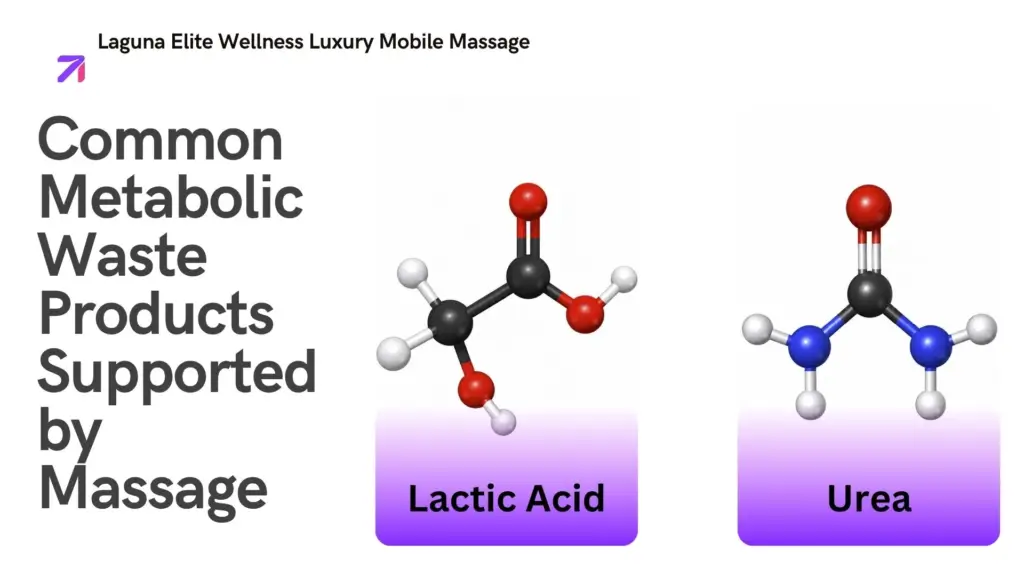
Common Metabolic Waste Products Supported by Massage
When people ask what toxins are released after massage, they’re usually referring to the natural metabolic byproducts that build up in muscle tissue. These include:
- Lactic acid — produced during muscle activity and exertion. While modern research shows lactic acid clears on its own fairly quickly, massage can help ease the associated muscle soreness and stiffness.
- Urea and creatinine — normal nitrogen-based waste products from cellular metabolism that the kidneys filter out.
- Carbon dioxide and cellular waste — natural byproducts of energy production within cells.
- Excess fluid and inflammatory byproducts — which can pool in tissues, contributing to swelling and that “heavy” feeling in tired muscles.
It’s worth emphasizing that these aren’t dangerous “poisons.” They’re the ordinary residue of a working body. Massage simply helps mobilize them so your circulatory and lymphatic systems can carry them off for processing.
How the Lymphatic System Responds During Massage?
The lymphatic system is the unsung hero of this entire process. Unlike your circulatory system, which has the heart to pump blood, the lymphatic system has no central pump. It relies on muscle movement, breathing, and external pressure to move lymph fluid through its network of vessels and nodes.
This is exactly where massage shines. The rhythmic pressure and strokes of a massage mechanically encourage lymph to flow, helping transport waste products and excess fluid toward the lymph nodes, where they’re filtered. This is also why certain techniques, like lymphatic drainage massage, are specifically designed to reduce swelling and support immune function.
According to Cleveland Clinic, the lymphatic system plays a vital role in removing waste from bodily tissues — and gentle movement and stimulation help keep it functioning well.
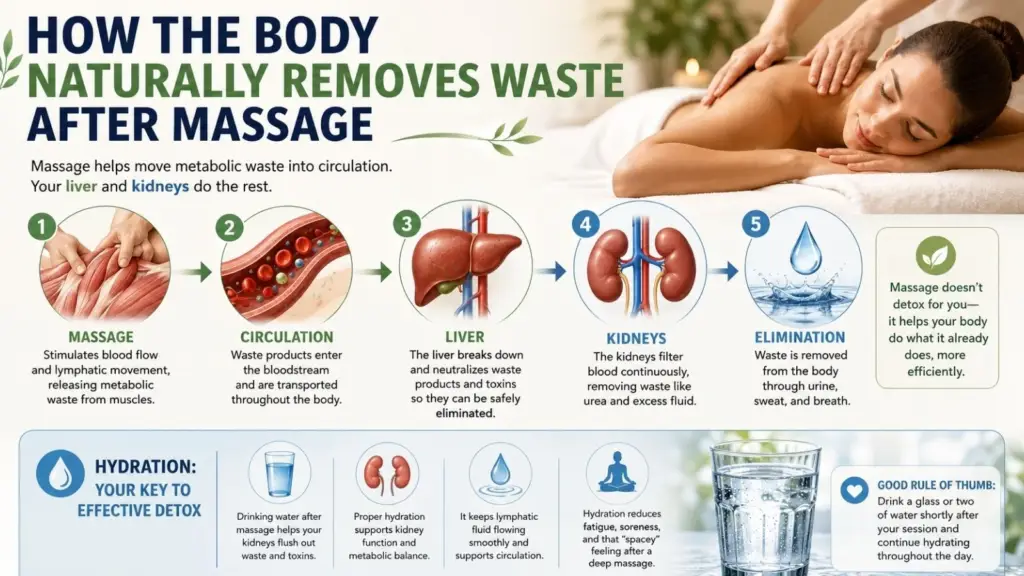
How the Body Naturally Removes Waste After Massage?
Role of the Liver and Kidneys in Detoxification
Once massage helps mobilize metabolic waste into circulation, the real detox work falls to two powerhouse organs: the liver and the kidneys.
The liver acts as your body’s primary filtration plant, breaking down waste products and neutralizing substances so they can be safely eliminated. The kidneys filter your blood continuously, removing waste like urea and excess fluid and excreting them through urine. Together, these organs handle the vast majority of your body’s detoxification — massage simply helps deliver waste to them more efficiently by boosting circulation.
This is why hydration is so frequently recommended after a session. Your kidneys need adequate water to flush waste effectively.
Importance of Hydration After Massage
Drinking water after a massage isn’t a marketing myth — it genuinely supports your body’s waste-removal systems. Proper hydration helps the kidneys filter and excrete the metabolic byproducts that massage has helped mobilize, and it keeps your lymphatic fluid flowing smoothly.
Hydration also helps counteract the mild fatigue or “spacey” feeling some people experience after a deep massage. Replenishing fluids supports circulation, eases potential soreness, and helps your muscles recover. A good rule of thumb is to drink a glass or two of water shortly after your session and continue hydrating throughout the day.
Massage Techniques That Support Natural Detox Flow
Swedish Massage for Circulation Support
Swedish massage is perhaps the best-known technique for supporting circulation and lymphatic flow. Using long, gliding strokes (effleurage) and gentle kneading, it encourages blood and lymph movement throughout the body without intense pressure.
This makes Swedish massage an excellent choice for general wellness, relaxation, and supporting your body’s natural waste-clearing processes. It’s gentle enough for almost everyone and is often the ideal starting point for those new to massage. You can explore this and other options in our guide to the different types of massages we offer.
Deep Tissue Massage for Muscle Tension Release
Deep tissue massage works on the deeper layers of muscle and connective tissue, using slower, more focused pressure to release chronic tension and knots. By breaking up areas of tightness and improving blood flow to congested tissues, it helps mobilize the metabolic waste that can accumulate in overworked or strained muscles.
Because deep tissue work is more intense, it’s especially common to feel mild soreness afterward — and to benefit most from good hydration and rest. Our licensed therapists tailor the pressure to your comfort and goals during every therapeutic massage session, ensuring you get effective relief without unnecessary discomfort.
Best Practices After Massage
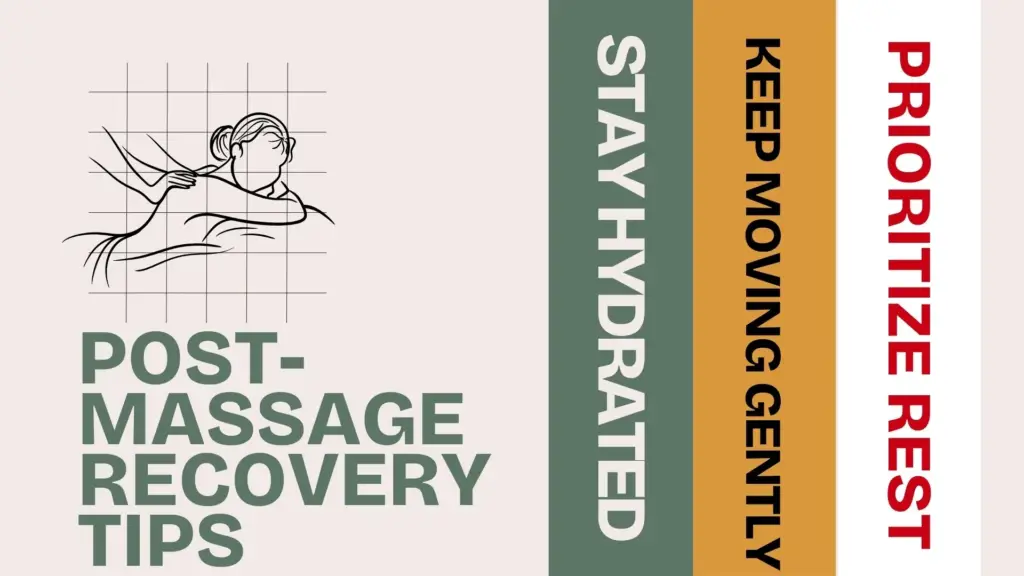
Rest and Recovery Tips
Your body does some of its best recovery work when you give it a chance to rest. After a massage — especially a deep one — try to avoid strenuous activity for the rest of the day. This allows your muscles to fully relax and your circulatory and lymphatic systems to continue their work without competing demands.
Many people feel pleasantly tired or deeply relaxed after a session. Listen to that signal. A calm evening, a warm bath, or simply an early night can amplify the benefits of your massage and help you wake up feeling refreshed. Because Laguna Elite Wellness comes to you, there’s no commute home — you can go straight from the table to total rest.
Hydration and Light Movement
While rest is important, gentle movement also helps. Light activity like a leisurely walk or easy stretching keeps your circulation and lymphatic flow active, supporting the continued clearance of metabolic waste. The key is gentle — this isn’t the time for an intense workout.
Pair light movement with consistent hydration, and you’ve given your body everything it needs to process the effects of your massage. As the Mayo Clinic notes, massage is a valuable tool for reducing muscle tension and stress — and supporting it with good post-massage habits helps you get the most from every session.
Book Your Massage at Laguna Elite Wellness Today and Start Your Detox Journey
There’s no better time to support your body’s natural wellness than now. At Laguna Elite Wellness, our licensed, insured therapists bring personalized, professional care directly to your home, hotel, or vacation rental — designed to improve circulation, release tension, and help you feel lighter, calmer, and more refreshed.
Whether you’re looking for the gentle circulation support of a Swedish massage or the deeper relief of a deep tissue session, we’ll tailor the experience to your needs in a clean, relaxing setting, wherever you are across Laguna Beach CA, Palm Springs CA, and Springfield MO.
Quick Overview of Body Detox Support After Massage
| Body System | What It Does After Massage | How Massage Helps |
| Circulatory system | Carries oxygen, nutrients, and waste through the blood | Increases blood flow, delivering waste to filtering organs faster |
| Lymphatic system | Transports cellular waste and excess fluid to lymph nodes | Stimulates lymph flow through pressure and movement |
| Muscular system | Stores metabolic byproducts during activity and tension | Releases tension and mobilizes accumulated waste |
| Nervous system | Regulates stress, recovery, and the “rest and digest” state | Activates relaxation response, supporting overall recovery |
Frequently Asked Questions
Does massage actually release toxins from the body?
Not in the literal sense often described. Massage doesn’t squeeze poisons out of your muscles — but it does stimulate blood circulation and lymphatic flow, which helps your body move natural metabolic waste (like lactic acid and cellular byproducts) toward the liver and kidneys for processing. So while “releasing toxins” is a simplification, massage genuinely supports your body’s natural waste-clearing systems.
Why do I feel tired after a massage session?
Post-massage fatigue is common and completely normal. It happens because massage activates your parasympathetic nervous system — the “rest and digest” state — which promotes deep relaxation. Deep tissue work can also leave muscles feeling tired as they recover. Staying hydrated, resting, and avoiding strenuous activity afterward helps you bounce back feeling refreshed rather than drained.
How much water should I drink after a massage?
A good guideline is to drink one to two glasses of water shortly after your session, then continue hydrating throughout the day. Water supports your kidneys in filtering and flushing the metabolic waste that massage has helped mobilize, and it helps reduce potential soreness. There’s no need to overdo it — consistent, normal hydration is what matters most.
Can massage improve circulation and detox flow?
Yes. Improving circulation is one of massage’s best-documented benefits. The pressure and movement of massage encourage blood flow and stimulate the lymphatic system, both of which help transport waste products and fresh nutrients more efficiently. Better circulation supports your body’s natural detox processes and contributes to faster muscle recovery and reduced tension.
Which massage type is best for full body detox support?
Swedish massage is often considered the best choice for general circulation and lymphatic support, thanks to its flowing, full-body strokes. For those who need to release deeper muscle tension where waste can accumulate, deep tissue massage is highly effective. Lymphatic drainage massage is another specialized option specifically designed to support fluid movement and reduce swelling. Our therapists can help you choose the right one.
How often should I get a massage for best results?
It depends on your goals. For general wellness and relaxation, once every two to four weeks works well for most people. If you’re managing chronic tension, recovering from intense activity, or addressing a specific issue, more frequent sessions may help initially. Consistency produces the best cumulative benefits for circulation, recovery, and overall well-being — your therapist at Laguna Elite Wellness can recommend a schedule tailored to you.